
How Virtual Reality Could Transform Casinos
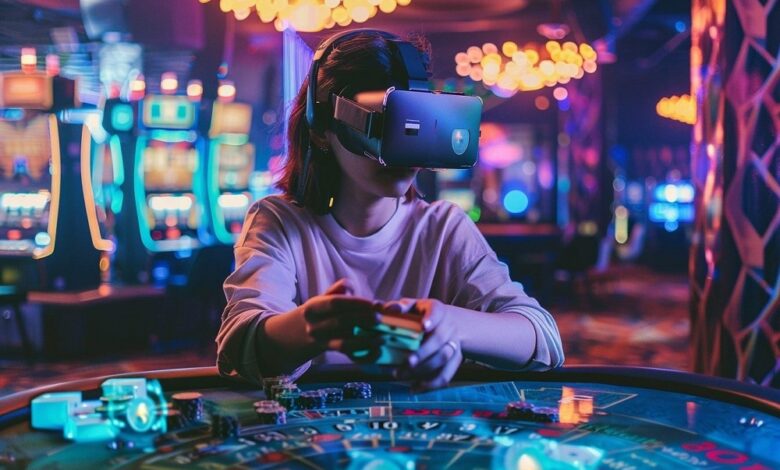
The gambling industry has consistently evolved alongside technological advancements. From the mechanical levers of early slot machines to the digital shift of online betting sites, casinos adapt quickly to changing consumer landscapes. Today, the sector stands at the edge of another major disruption driven by virtual reality hardware and software. By creating completely immersive digital environments, this technology could fundamentally alter how people interact with casino games, shifting the industry from a two-dimensional screen-based experience to a fully interactive digital world.
Traditional brick-and-mortar casinos rely on sensory experiences, including flashing lights, ambient crowd noises, and luxury interiors, to create an atmosphere of excitement. Online casinos offer unmatched convenience but often struggle to capture that specific communal atmosphere. Virtual reality serves as a technological bridge between these two models. It provides the accessibility of home betting while recreating the spatial and social dimensions of a physical venue.
Bridging the Gap Between Online and Physical Gambling
Online casinos succeeded by allowing users to access slot machines and card games from anywhere at any time. However, staring at a flat user interface lacks the visceral engagement of sitting at a physical table. Live dealer games mitigated this issue by streaming video feeds of real dealers, but the player remains a passive observer behind a glass pane.
Virtual reality fundamentally alters this dynamic by placing the player inside the casino environment. When users put on a head-mounted display, they can walk through a digital lobby, view detailed replicas of high-end resorts, and sit down at a craps table or blackjack table. The spatial audio technology mimics how sound travels in an actual room, meaning the murmur of distant crowds grows louder as you approach a busy section of the casino floor, reinforcing the illusion of presence.
Enhanced Social Interaction and Avatar Dynamics
Gambling is historically a social activity. Whether it is sharing a joke with a dealer or celebrating a big win with fellow players around a roulette wheel, the shared experience is central to the appeal. Standard online casinos reduce this interaction to a simple text chat box, which can feel detached and sterile.
In a virtual reality casino, players choose or customize digital avatars that interact in real time. Advanced headsets feature eye tracking and face tracking, allowing these avatars to mimic subtle human behaviors like blinking, looking at an opponent, or smiling.
-
Players can use hand gestures to signal a hit or a stay at the blackjack table.
-
In poker, players can look directly at an opponent to look for behavioral tells or physiological signs of bluffing, such as sudden head movements.
-
Users can converse via natural voice communication, allowing for casual banter and strategic table talk that mirrors a live casino lounge.
The Evolution of Game Design and Interactive Slots
Slot machines in physical casinos have transitioned from physical reels to large video displays. In the digital space, developers are no longer constrained by the physical footprint or manufacturing costs of a heavy metal cabinet. Virtual reality unlocks entirely new dimensions for game design.
Instead of pressing a button on a computer keyboard to spin a reel, a virtual reality player can physically pull a digital lever or reach out to touch the game screen. Slot machines can expand outward, enveloping the player in a three-dimensional visual narrative. For example, a slot machine themed around an ancient tomb could physically transport the player inside a hidden chamber during a bonus round, requiring them to search for treasure chests or solve spatial puzzles to unlock payouts. This shifts the core mechanics away from simple repetitive clicking toward active exploration and experiential entertainment.
Re-imagining Live Sportsbook Experiences
Sports betting has grown exponentially with the rise of mobile applications. However, placing a bet on a mobile device remains an isolated task. Virtual reality has the potential to transform sportsbooks into ultimate, localized viewing centers for remote users.
A virtual reality sportsbook can position a bettor inside a digital luxury stadium suite alongside friends who live across the globe. The environment can feature massive wall-to-sized virtual televisions displaying live high-definition broadcasts, real-time data feeds showing updated player statistics, and scrolling betting lines. Bettors can glance at the updated prop bets, place a live wager with a hand movement, and watch the game unfold as if they were sitting in premium stadium seating, creating an unmatched layer of convenience and community.
Addressing Technical, Operational, and Regulatory Hurdles
Despite the immense potential, the widespread adoption of virtual reality in the casino industry faces several substantial hurdles that developers and operators must overcome.
Hardware Access and Consumer Adoption Costs
High-quality virtual reality headsets require a notable financial investment from consumers. While standalone devices have become more accessible, the high-fidelity graphical rendering needed to create hyper-realistic casino spaces often demands powerful processing units. Until a critical mass of global consumers owns this hardware, casino operators may hesitate to fund the massive development budgets required for premium virtual reality environments.
Regulatory and Compliance Complexities
The global gambling industry is subject to strict regional regulations regarding age verification, geographical restrictions, and financial tracking. Virtual reality introduces unique compliance challenges. Regulators must establish robust frameworks to verify that a person wearing a headset is of legal gambling age and is located within a jurisdiction where online betting is permitted. Tracking digital assets and managing potential anti-money laundering protocols inside a three-dimensional virtual space requires advanced security measures.
User Comfort and Physical Health
A significant segment of the population experiences motion sickness or visual fatigue when using virtual reality hardware for extended periods. This phenomenon occurs when there is a mismatch between what the eyes see and what the inner ear senses. Because typical casino sessions can last several hours, software developers must optimize frame rates and implement teleportation-based movement systems to ensure user comfort and prevent nausea.
Responsible Gambling in an Ultra-Immersive Era
The psychological impact of virtual reality is a critical area of study for responsible gambling advocates. The primary objective of virtual reality is to induce a state of presence, making the user brain genuinely believe they are inside the digital environment. This deep level of immersion can make it much easier for players to lose track of time and detach from reality.
To mitigate the risk of problematic gambling behavior, virtual reality operators must design proactive, built-in safety features:
-
Incorporate highly visible digital clocks inside the virtual casino space to anchor players to real-world time.
-
Program mandatory pop-up notifications that periodically pause gameplay to remind users how long they have been active.
-
Implement accessible self-exclusion tools and strict session-spending limits directly into the user account dashboard.
Frequently Asked Questions
Do I need an expensive personal computer to access virtual reality casinos?
No, you do not necessarily need a high-end personal computer. While early virtual reality headsets required a constant tether to a powerful desktop computer, modern standalone headsets feature internal processors and can run virtual reality casino software directly via a wireless internet connection. However, using a personal computer with a powerful graphics card will deliver significantly higher visual fidelity, smoother frame rates, and more complex environmental textures.
Can I play virtual reality casino games using standard currency or cryptocurrency?
The accepted payment methods depend entirely on the specific platform and the laws of your local jurisdiction. Many virtual reality casino operators integrate standard fiat currencies through traditional credit cards, electronic wallets, and bank transfers. Other platforms operating in decentralized ecosystems leverage popular cryptocurrencies for faster transaction speeds and automated payouts via smart contracts.
How do virtual reality casinos ensure that the games are completely fair?
Virtual reality casinos use the exact same foundational technology as reputable standard online casinos to guarantee game fairness. The outcomes of all card shuffles, slot spins, and dice rolls are governed by a certified Random Number Generator. These cryptographic algorithms are audited regularly by independent third-party testing laboratories to ensure compliance with strict regulatory standards.
Are there any options to experience these digital casinos without wagering real money?
Yes, many virtual reality casino applications feature robust free-to-play modes or social lobbies. In these spaces, players are given a daily allowance of complimentary digital chips or play money. This setup allows users to explore the luxurious digital architecture, interact with global players, and practice their table game strategies without risking any personal financial capital.
How does eye-tracking and hand-tracking work during a virtual card game?
Modern virtual reality headsets are equipped with inward-facing infrared cameras that track the movement of your pupils to detect exactly where you are looking. Outward-facing cameras and sensors track the precise positioning of your hands and fingers without requiring physical controllers. In a card game, this allows the system to register natural movements, meaning you can tap the table to request another card or slide your hands forward to push your chips into the pot.
Can people with physical mobility limitations use virtual reality casinos effectively?
Virtual reality offers an accessible alternative for individuals who face physical challenges traveling to distant land-based casino resorts. Most virtual reality casino applications feature robust accessibility settings that allow players to navigate the entire space, sit at tables, and interact with games comfortably using stationary seated mode configurations or custom controller re-mapping layouts.
What happens if my internet connection drops in the middle of a high-stakes hand?
Casino software is programmed with specific disconnection protocols to safeguard player funds. If your connection drops during a live hand, the server will generally implement a standard fallback action based on the specific game rules. In poker, your hand may be automatically checked or folded if there is an active bet. In games like blackjack, the hand will often pause on the server side, allowing you to complete the play once you re-establish your connection, or it will evaluate the hand using basic optimal strategy.


